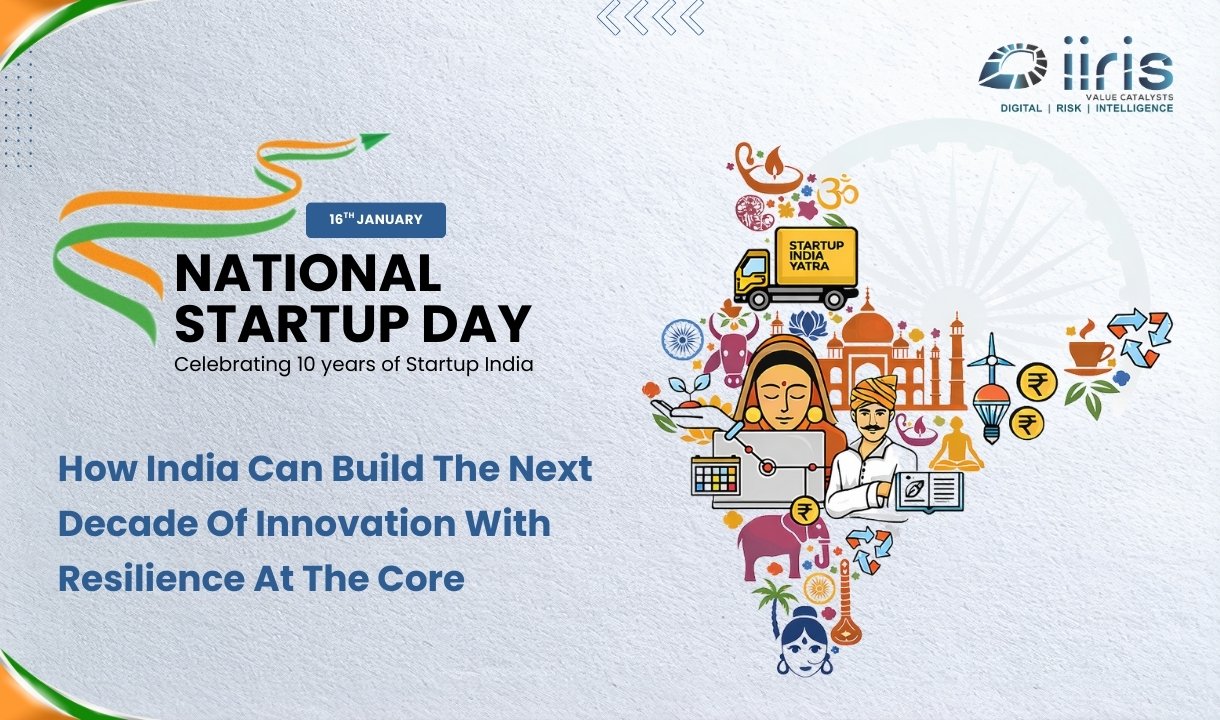
Celebrating National Startup Day in the year 2026, the occasion holds great importance beyond celebration. The country today stands at an interesting crossroads, a decade after the launch of the Startup India initiative, and it requires not just innovation but also needs to infuse resilience, trust, and strong governance in the coming years of India’s startup journey.
In 2016, India had fewer than 500 officially recognized startups; today, India has more than 2,00,000 DPIIT-recognized startups in 790+ districts (Source: Startup India Factbook). This expansion is unprecedented for any emerging economy.
A careful analysis of the Indian startup model gives us a clear indication of the future of India’s innovation journey. Let’s take a look at the actual data and not just our own personal impressions.
- Startups are now a pan-India phenomenon
The latest Startup India Map shows that more than half of recognised Indian startups are located in Tier 2 and 3 cities.
This dispersion signals two things:
- India’s entrepreneurial drive is becoming more inclusive.
- Thus, more solid compliance, advisory, and ecosystem support would be required for startups, which are naturally accessible only in metro cities.
- Funding is cautious, not collapsing
While the global funding winter of 2023–2024 tightened the fund flows, India resisted the global trend with resilience. The India Venture Capital Report by Bain noted that:
- Early-stage deal volume remained stable
- Late-stage rounds showed a gradual recovery in 2025
This means startups in 2026 will have to show risk maturity, governance, and stronger unit economics to unlock capital, not just visionary storytelling.
- Tech startups continue to drive India’s innovation arc
The NASSCOM–Zinnov Indian Tech Startup Report 2024 highlighted that India’s tech startup ecosystem is the third-largest in the world, with high-growth momentum in:
- Artificial Intelligence
- SaaS
- Fintech
- Healthtech
- Cybersecurity
- Deeptech
AI-led startups in particular have shown 40%+ YoY growth, positioning India as a significant supplier of enterprise-grade AI solutions globally.
- Unicorns are stabilising, but the focus is shifting
India has 125 unicorns as of January 2026, with many more at the soonicorn stage (Source: Tracxn). But the narrative is changing, unicorn status is no longer about valuation; it’s about sustainable, compliance-aligned growth.
Investors in 2026 are looking for startups that can:
- Manage risk proactively
- Demonstrate integrity and governance maturity
- Build secure operations
- Maintain consistent compliance
- Scale sustainably, not aggressively
The Real Challenges Startups are Facing in 2026
Most conversations around startup success focus on revenue growth, market expansion, and fundraising. But the challenges that quietly determine a startup’s fate often lie somewhere else.
Below are the six biggest yet least-discussed challenges founders face in 2026:
- Talent Integrity & Organisational Trust
With rapid hiring cycles, distributed teams, and hybrid work, the risk of the deceptive practices mentioned below has grown substantially:
- Misrepresentation
- Fraud
- IP leakage
- Third-party misconduct
- Rising Cybersecurity Exposure
Startups experienced a significant rise in cyberattacks in 2025, mainly on companies dedicated to retail, financial technology, health technology, and SaaS. (Source: India Cyber Threat Report 2025)
Startups are becoming primary targets for cybercriminals, particularly because they develop applications using cloud-based services. Cybercriminals are targeting:
- Ransomware groups
- Exploited APIs
- Third-party apps that don’t enforce the security standards
- Employee security practices
Cyber preparedness is no longer optional; it’s an investor diligence requirement.
- Governance, Compliance & POSH Maturity
Governance, compliance, and POSH maturity have never been more important. Investors assess every startup against their ability to demonstrate risk frameworks along with financial projections. These include:
- ISO compliance
- Information security audits
- POSH regulations
- Due diligence requests for vendors
- Data privacy requirements
- Operational & Physical Risk Across New Locations
As businesses expand into warehouses, delivery hubs, micro-offices, and manufacturing sites, it significantly increases the risk of:
- Loss prevention failures
- Health & safety non-compliance
- Operational blind spots
This is especially true for startups that are scaling into Tier 2 or Tier 3 cities, where infrastructure varies widely.
- Employee Well-Being & Burnout
The silent crisis in India’s startup ecosystem is human. Extended work hours, resource constraints, aggressive targets, and continuous pivots trigger burnout.
Burnout → attrition → productivity loss → culture erosion.
In 2026, founders are realising that well-being is not an HR initiative; it is a strategic necessity.
- Access to Trusted, Ready-to-Deploy Talent
The lifecycle of a startup requires:
- quick contractual hiring
- domain specialist availability
- short-term project deployments
- vetted external talent
- embedded resources for high-stakes functions
Given the speed at which startups need to move, reliable talent pipelines matter as much as product pipelines.
What Startups Actually Need in 2026
Looking at the data and the ground realities, we can say that startups in 2026 need a lot more than just capital and customers. They need:
✔ Risk maturity
✔ Talent trust & organisational integrity
✔ Cyber and infosec readiness
✔ POSH & ethics structure
✔ Operational resilience
✔ Employee well-being mechanisms
✔ Resource agility
If we put this simply, the next decade of Indian startups will be built on resilience, not just innovation.
How IIRIS Supports Startups as a Risk & Resilience Partner?
Working closely with VC portfolios, founders, and early-stage companies across sectors, IIRIS has shaped services around the practical challenges startups face today:
- Employee Integrity Monitoring: Reduces internal fraud risks, strengthens culture, and builds investor confidence.
- POSH, Whistle-blower & Ethics Support: Creates safer, transparent workplaces, often essential for mid-stage funding.
- Cyber Audit, Security & Compliance: Identifies vulnerabilities early and helps meet cybersecurity expectations of investors and clients.
- Operational Risk & Physical Safety: Supports safer, compliant processes that grow with growth.
- Mental Health & Wellness (EQ Helpline): Improves productivity, reduces attrition, and builds a healthier work environment.
- Skill Provisioning & Resource Deployment: Helps teams fill roles quickly without compromising trust or capability.
IIRIS is committed to supporting startups as we shape India’s future with robust platforms, governance systems, and data-driven intelligence to allow them the opportunity to scale sustainably. After all, the long-term success of an ecosystem is determined by foundation strength rather than the rate of growth.