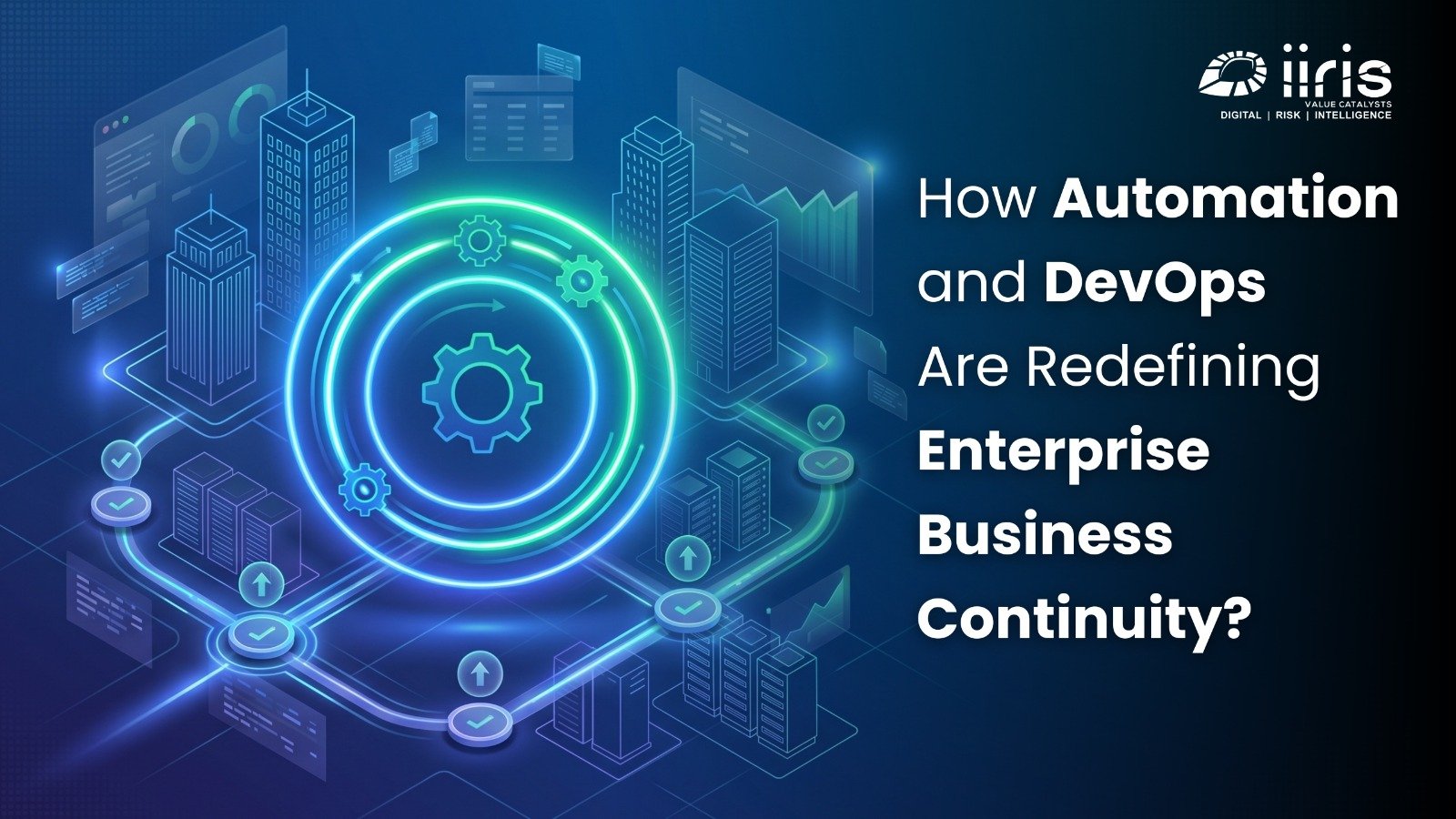
Most businesses assume themselves to be resilient. They have backup mechanisms. They are equipped with recovery plans. They even possess runbooks so large they would serve as doorstops. Then something happens, some sort of unplanned disruption, perhaps an infrastructure catastrophe or a ransomware attack occurring quicker than the incident response team can react, and it becomes clear just how wide the gap between planning and reality can become.
The bitter truth of the matter is that conventional business continuity methodologies simply never envisioned the operational landscape that many businesses now find themselves in. They were developed with a world in mind where infrastructure was predictable, changes occurred slowly, and disruptions occurred in isolation. Those days are long gone, and organizations continuing to approach continuity from a decade-old perspective aren’t resilient; they’re simply untested.
Why Reactive Continuity Is a Structural Problem
How the reactive approach to continuity management operates is: There is an event, someone gets notified, a team responds, some sort of manual intervention takes place, and restoration occurs. The process takes the best part of a day in the best-case scenario; for an environment with multiple systems, it may take several days.
The cost of that gap is more than just a lack of productivity in the course of hours lost during the operation. The cumulative risk of having critical systems compromised grows with each additional hour when the system is unstable, since the process of completing financial transactions and meeting client requirements slows down and accumulates regulatory compliance risks and attackers’ dwelling time in the case of security incidents.
Additionally, the reactive approach depends on one element that has become rarer in modern infrastructure environments – human knowledge of the current state of affairs. No IT support staff has real-time visibility of a globally distributed company that may contain thousands of servers, hundreds of applications, and cloud-based workloads. Failure is usually underway before operators even notice it. This is not a personnel issue. It is an architectural issue.
Automation as a Continuity Strategy, Not an Efficiency Tool
In the business context of discussing automation, far too often we have spoken only in terms of speed, efficiency, deployment, reduced manual involvement, and, ultimately, cost savings. All of which is entirely true. However, there is so much more to automation than those elements.
Automation, when designed properly, moves away from a continuity strategy toward responding to an approach that prevents problems from happening in the first place. This doesn’t mean the human factor becomes irrelevant. It simply means that there’s an entire category of issues humans will be unable to catch in time due to their speed, frequency, and contextual nature.
Vulnerability management automation takes this concept to the realm of cybersecurity. While it used to take months of rigorous manual testing and approvals before any patch could be implemented, automation means that these cycles become much shorter, and the time when systems are vulnerable is minimized.
Automation of compliance means that the status of your infrastructure is continuously kept in accordance with policy. Instead of post-factum audits, automated drift detection makes it possible to know immediately if there’s something wrong with your system. For organizations that are required to follow certain compliance procedures by DPDP, SEBI guidelines, or RBI’s technological risk framework, this makes a significant difference.
DevOps and the Continuity Dividend
The transformation in the software delivery process brought about by the advent of DevOps in the last decade has a hidden continuity benefit that is usually not explicitly stated: organizations that have embraced the DevOps way, i.e., its cultural approach to delivery as well as its practices of deployment and continuous feedback, will find themselves more capable of surviving adverse events compared to their peers.
Why? Because DevOps allows changes to be tested much faster than before, meaning that if a particular update causes any issue to the operation, this problem would come to light relatively quickly, and therefore it would be easier to undo it. In a conventional release cycle, such problems could not be noticed until after several days since the release was implemented in the production environment. Thus, rather than asking themselves how they could move slowly to mitigate risks, companies need to ask how they can achieve observability and rollback.
Multicloud Strategy and the Continuity Architecture Question
In practice, most organizations with cloud environments are taking an approach to cloud usage called multicloud. That’s because of cost optimization, diversified vendor risk, and specific performance needs of various workloads.
When an organization places workloads across different cloud providers, they forget to think about continuity in case of a provider-specific failure scenario. Data is replicated incorrectly. Automated failovers between cloud providers aren’t considered. The relationships between systems in different clouds and on-premise environments are unclear. The reality hits the company in the form of a disruptive event that occurs at a particular region of one of their cloud vendors, which happens more often than they admit to the public.
For an organization to have a true multicloud continuity architecture, they need to define RTO and RPO for different categories of workloads. They need to create failovers that work without additional communication between different parties. And lastly, they need to create data synchronization strategies across multiple environments.
Conclusion: Resilience Is an Engineering Choice
This move from reaction to resilience can’t be accomplished by simply creating more effective planning documents or allocating more budget toward IT. It comes through specific engineering decisions like
- Automation frameworks that lower the dependency on human input for predictable failure scenarios
- DevOps processes that limit the blast radius and allow rapid recovery
- Multicloud designs that focus on continuity over cost
- Observability tools that provide visibility into the state of these systems for leaders
Those organisations that consistently make such decisions won’t prevent disruption — there isn’t any architectural pattern out there that does that. However, what they will do is shorten the gap between disruption and recovery to the point where it is acceptable in terms of business consequences, regulatory risk, and reputation within the customer base and partner ecosystem.
In the world of growing complexity and evolving threat actors, that ability is not just an advantage. It’s a necessity.
IntelliFuture is the technology vertical of IIRIS Consulting, a global leader in risk, security, and intelligence. It extends IIRIS’s mission of turning uncertainty into opportunity by embedding technology into resilience and risk‑management solutions. Through IntelliFuture, IIRIS integrates digital innovation with its proven expertise in forensic investigations, risk advisory, and security intelligence.