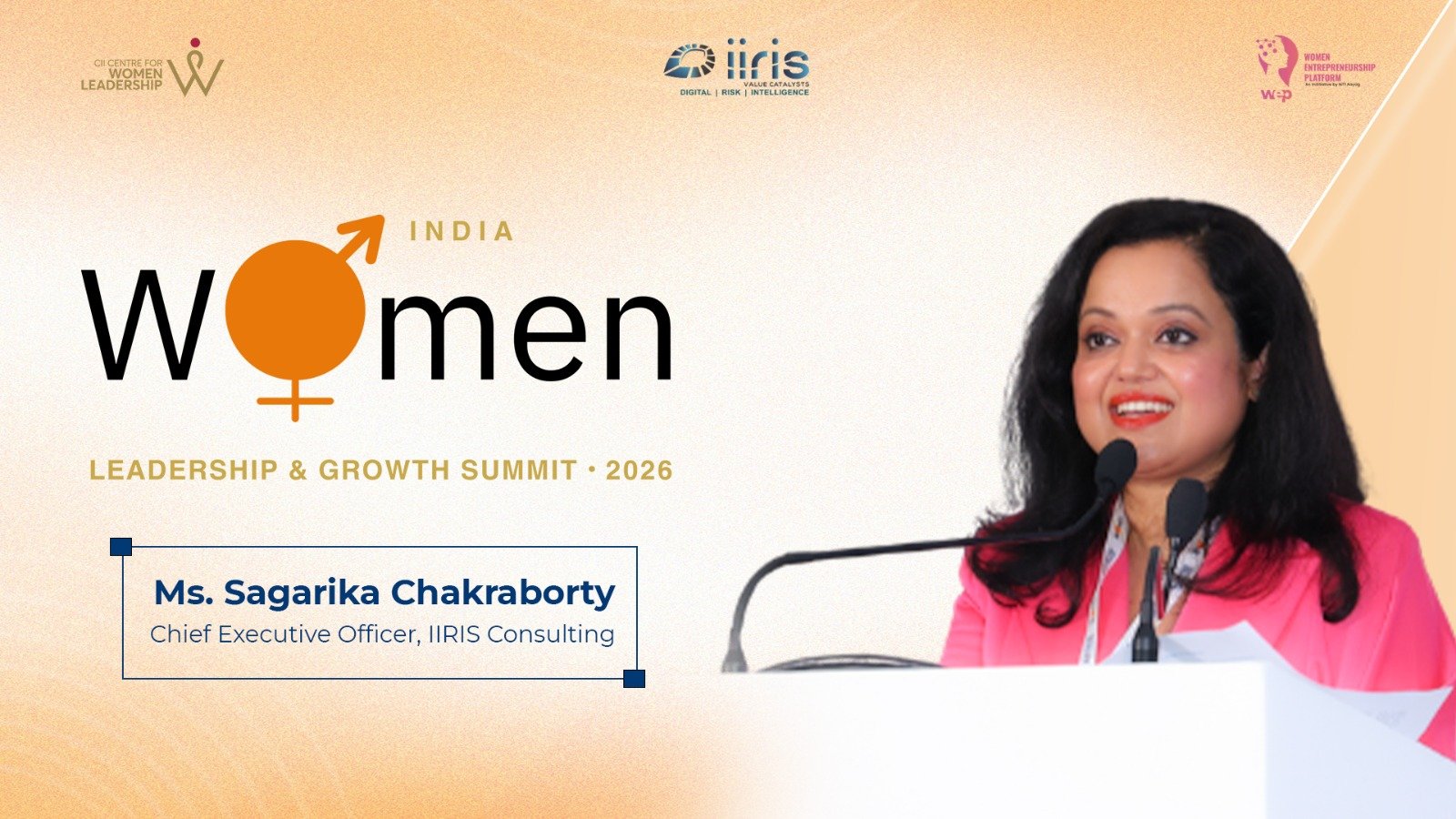
Inside Sagarika Chakraborty’s Opening Address at IWLGS 2026
For decades, discussions on women as leaders have revolved around the concept of empowerment. Programmes were developed on it by governments. Organisational strategies were developed for it. Debates were held on it at conferences. Despite all the efforts, there was one thing left unsaid: How come women are being empowered if so many of them are leaving?
There is one aspect that organisations tend to overlook when dealing with this issue. The thing is that women don’t need empowerment; they need belonging. Empowerment means lack of ability, and its presence should be granted. Belonging implies the presence of the capability, and it should be recognised.
In the course of time, women kept experiencing an unpleasant situation that most organisations did not want to acknowledge. Women are invited to workplaces, but not always treated as full-fledged creators of organisational culture. Women are invited to talk about organisational culture, but not about organisational strategy. Women are represented in diversity reports, but not in decision-making positions.
Not only is this a social problem, but also an economic problem.
Why Talent Leaves Before It Reaches Leadership
India has well over 600 million women; however, the labor force participation of women is still considerably low compared to their potential. There have been around 20 million women who have dropped out of the workforce in the last two decades, especially during what could be considered their peak working ages. The problem has never been a lack of motivation or capability; it is always about the repeated pressure on women to earn their place. It starts much earlier than the boardroom.
Every study conducted on this topic indicates that women take longer to get promoted to the level of managers; they are less represented in senior leadership positions; moreover, their behaviors are constantly judged while similar actions are praised in men.
The Hidden Cost of Conditional Belonging
Assertiveness is often taken as aggression, and ambition is often regarded as a personal flaw. The workplace culture where women should prove their place is what prevents true success.
Creating a special path for women is not going to help. We need to make sure women can access existing paths equally. Women do not want special treatment. They want the freedom to lead, contribute, innovate, and have influence without needing to keep proving their right to occupy the space. This is why the discussion must shift from one about representation to one about participation.
From day one at IIRIS Consulting, this was our mission. We have never been interested in creating opportunities for women purely for the sake of tokenism. We are about putting capable women into those places where the impact is made, right next to clients, leading teams, and driving results.
And the conclusion has been that when women are afforded the dignity of belonging, they don’t just deliver great performance. They change organisations. Leadership must change, too.
Leadership Is About Building Ladders
Women leaders are often said to have a different perspective. Diversity of perspectives is important; fundamentally, leadership should not be about gender. Leadership is about creating opportunities for others, paving paths forward for future talent, and strengthening institutions.
Leadership at its very best does not involve ladder climbing. This task falls upon every leader, irrespective of their gender.
What Organisations Must Do Next
As things stand today, many organisations from various sectors have come to appreciate what women bring to the table. Things are moving in the right direction, as there are women who are finding their way in the male-dominated industries and organisations that are making a commitment towards change.
However, things must go beyond momentum.
There needs to be an additional step in the process of change that will see organisational leaders not just formulate policies but change their culture. Organisations need to stop thinking about how women can fit within existing structures, but rather think of ways that the system reflects the talent that is attracted.
Empowering women should not be the way forward for future leadership. Women should not be asking questions about whether they belong. Belonging is not a privilege. It is what builds the foundations of leadership, resilience, innovation, and growth.